Are you looking for a garden style that’s both modern and low-maintenance? Then an industrial garden is the perfect choice for you. This rugged style is growing in popularity, especially among owners of modern homes who love clean lines and durable materials. In this blog, you’ll learn all about industrial gardens and can decide whether this bold garden style suits your home.
An industrial garden stands out for its rugged, no-nonsense character. This garden style has its roots in industrial design and the popular loft-living trend. The result is a garden that is functional, low-maintenance, and visually striking.
The industrial garden is all about sturdy materials which were originally used in industrial settings. Think of metals such as Corten steel and galvanized steel, various types of concrete, and large-format natural stone. These materials give your garden a rugged, authentic look that will last for years with little maintenance.
A second key feature is the use of clean lines and geometric shapes. Everything in an industrial garden has a clear function and form. Rounded borders become square planters, winding paths give way to straight lines, and everything is arranged in a clear, organized layout.
The color palette remains deliberately understated. Various shades of gray form the base, complemented by anthracite and white. Green comes primarily from the plants themselves and provides a beautiful contrast to the hard materials. This color scheme creates a sense of calm and timeless elegance.
The right materials make the difference between a successful industrial garden and a failed attempt. Quality is paramount, because cheap imitations don’t do justice to the authentic industrial look.
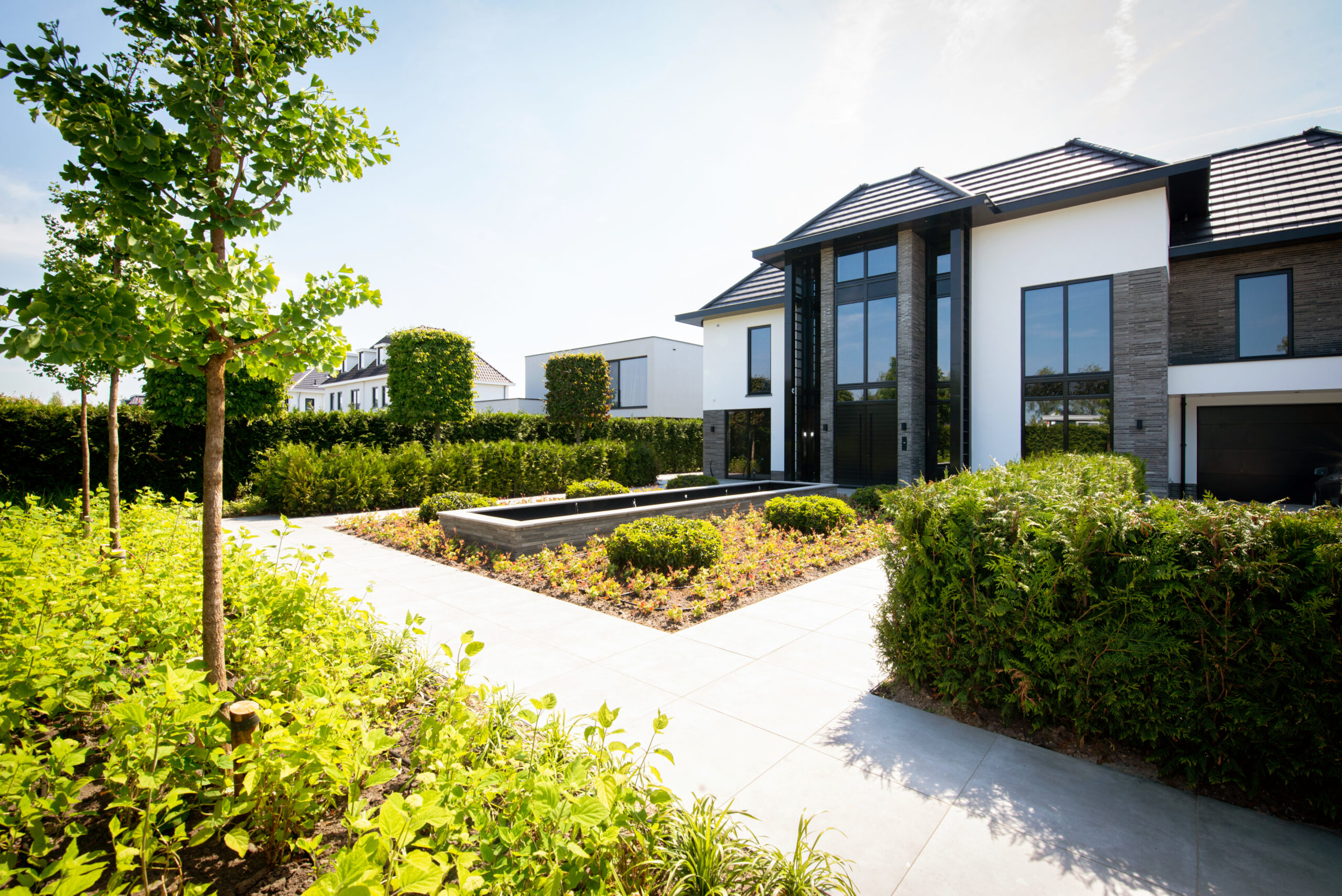
Paving forms the foundation of your industrial garden. Large concrete slabs measuring at least 60×60 centimeters create a rugged, industrial look. Basalt and dark natural stone also work very well, especially in large sizes. Industrial pavers in anthracite or dark gray are an option, but they must be laid in a tight pattern.
Borders and planters Corten steel is the signature material of the industrial garden. Over time, the material develops a warm, rust-brown patina that gives it a distinctive look and provides extra protection. As an alternative, you can choose planters made of cast concrete or natural stone in sleek, geometric shapes.
Screens and Partitions They can be made of various materials: metal slats, large glass panels, or sleek wooden planks in dark colors. The most important thing is that they complement the sleek, functional character of your garden.
Plants in an industrial garden serve a clear purpose: they soften the hard materials without disrupting the sleek look. Choosing the right plants therefore requires a thoughtful approach.
Ornamental Plants are your best friends in an industrial garden. Bamboo adds height and structure without being overpowering. Ornamental grasses such as pennisetum or miscanthus add movement while retaining their shape. Yucca and agave are perfect choices for those who love sculptural plants with a rugged look.
Clean lines They are excellent for emphasizing the geometric lines of your garden. Neatly trimmed boxwood balls in various sizes, sleek hedges that separate areas, or topiary shapes that serve as green sculptures. These plants do require regular maintenance to maintain their shape.
Textured Plants Various succulents and cacti, for example, fit perfectly with the minimalist style. They are also very low-maintenance. Modern perennials such as ornamental grasses, sedum varieties, and structural perennials complement the overall look without adding too much color.
The secret to a successful industrial garden lies in color coordination. Your base consists of various shades of green, complemented by silver-gray accents from plants such as donkey’s ear or artemisia. These colors harmonize perfectly with the gray and anthracite materials.
Limited color additions It’s possible, but it has to be very well thought out. A single area with white flowers, such as white ornamental grasses or a white-flowering climbing plant against a dark wall. Or, conversely, a single striking plant as an eye-catcher, such as a red Japanese maple in a steel planter.
An industrial garden requires careful planning. The balance between paved areas and greenery determines the success of your industrial garden. As a general rule, 60–70% should be paved surfaces and 30–40% should be plantings. This gives the industrial garden its characteristic, uncluttered look.
Geometric Shapes Use these as a guide for your layout. Work with rectangles, squares, and straight lines. Round shapes are acceptable, but only as a deliberate contrast—and don’t overdo it. A round coffee table in a square setting, for example.
Creating the perfect industrial garden requires expertise. Do you have any questions about materials or feasibility for your specific situation? Please contact us for a no-obligation consultation.