6 steps to the perfect decking in your garden
A decking is a wonderful addition to your garden. It forms an attractive transition between home and garden, creates a comfortable place to relax and adds to the overall look of your garden. Whether you want a modern patio or a natural-looking decking, good design and the right materials make all the difference. In this blog, we will discuss step by step how to create the perfect decking that blends seamlessly with your garden.
Step 1: Determine the right location
The first and most important step is to choose the ideal spot for your decking. Keep the following in mind:
- Sunlight: Do you want a sunny patio or would you prefer a shady spot?
- Substrate: A stable surface prevents subsidence and uneven boards.
- Drainage: Ensure that rainwater can drain properly to prevent wood rot and moisture problems.
- Environment: Be aware of trees and plants that can provide shade and leaf fall.
Tip: Choose a spot that connects to your walkways in the garden and provides a natural connection to your home.
Step 2: Design a decking that fits your garden
A decking should not only be functional, but also fit well with the style and layout of your garden. When designing, consider:
- The function of the decking: Will it be a terrace, a walkway or a place around a pond?
- The shape and dimensions.: A rectangular decking fits well with a sleek garden, while organic shapes fit better with a natural garden.
- Connecting to other garden elements.: Provide a natural transition to lawn, borders or a pergola.
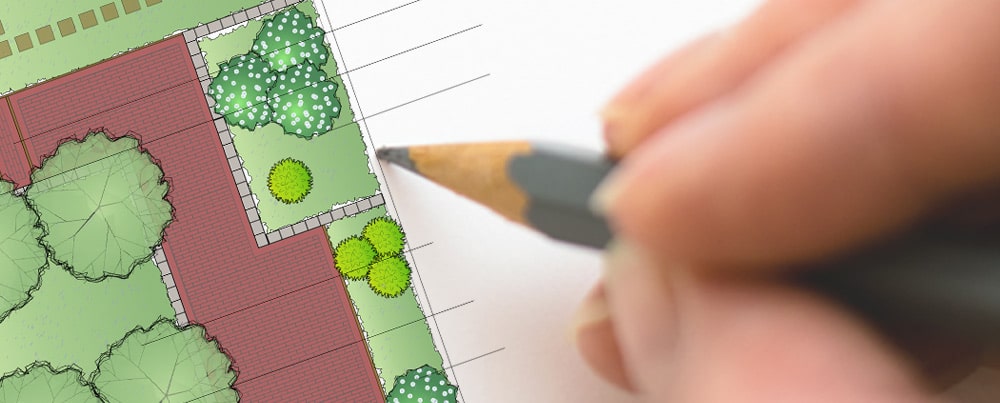
Tip: Make a sketch or have a garden designer create a 3D visualization to see how the decking fits into your garden.

Step 3: Choose the right material
The material of your decking determines not only its appearance, but also its longevity and maintenance.
Woods
- Hardwood (such as Bankirai or Ipé).: Durable, strong and resistant to weathering.
- Impregnated softwood (such as pine or spruce): Affordable, but less durable than hardwood.
- Bamboo: Environmentally friendly and extremely strong, but requires regular maintenance.
Composite
- WPC composite (wood-plastic mixture).: Low maintenance, splinter-free and resistant to mold.
- PVC composite: Water-resistant, durable and colorfast.
When choosing, consider durability, maintenance and the look that best suits your garden.
Step 4: Provide a solid foundation
A stable surface is essential for a safe and durable decking. There are several options for this:
- Concrete tiles: Prevents subsidence and provides a solid foundation.
- Screw foundation: A quick and environmentally friendly solution without concrete.
- Gravel bed: Provides good drainage and stability.
Tip: Make sure the foundation is slightly higher than the rest of the garden so that rainwater can drain properly.
Step 5: Install the decking boards correctly
For longevity and sleek results, proper installation of the boards is crucial.
- Laying direction: Lay the boards in the longitudinal running direction to reduce wear and dirt accumulation.
- Spacing between boards: Keep a spacing of 5-7 mm for expansion and proper drainage.
- Fastening method: Screw the boards in place with stainless steel screws or use an invisible clip system for a sleek finish.
Tip: Let the boards acclimate to your garden for a few days before installing them. This will prevent warping due to moisture differences.
Step 6: Maintenance and protection of your decking
To keep your decking beautiful and safe for years, regular maintenance is required.
- Hardwood decking: Clean and oil once a year to maintain color.
- Composite decking: Clean regularly with water and a mild detergent to prevent green deposits.
- Prevent slipperiness: Use an anti-slip coating or choose planks with a profile.
Custom advice
A well-designed decking is a natural extension of your garden. By paying attention to the right location, design, choice of materials and a solid foundation, you will enjoy a durable and stylish decking for years to come.
Would you like customized advice or help with the construction of your decking? StukArt Gardens is happy to help you with the design and realization.